What is Basement Excavation & Waterproofing and how does it work?
Basement excavation digs out the soil around your foundation to fix drainage, add waterproofing, or make the space taller. Waterproofing then keeps water from seeping through the walls or floor, usually with exterior drainage, sealants, and sometimes an interior sump pump.
Think of it as two jobs that often go together. Excavation is the heavy lifting: we remove dirt from the outside of your foundation or from under the slab. That gives us room to fix a cracked footing, install a drain tile system, or apply a waterproof coating to the exterior wall. Waterproofing is the layer of protection that goes on after the digging is done, plus the drainage that carries water away before it can push against your house.
In Birmingham, the red clay soil is the culprit behind a lot of wet basements. Clay holds water like a sponge, and when it gets saturated, it expands and puts pressure on your foundation walls. That hydrostatic pressure is what forces water through cracks and joints. Excavation lets us intercept that water at the source, not just patch the symptom from the inside.
The two services are priced separately. Small-scale basement excavations in Birmingham typically run $250 to $600, but that's for minor work like digging out a window well or a small sump pit. (birminghamgrading.com) Full waterproofing, which includes excavation, drainage, and sealing, lands between $7,000 and $48,000 for most Birmingham homes. (southerndry.com) The wide range comes down to how deep they dig, how long the foundation is, and what they find once the dirt is off.
Most homeowners can expect the cost to waterproof basements to range between $2,000 and $8,000. (apsfoundationrepair.com) That figure covers interior work like a sump pump and sealants, but it doesn't always include exterior excavation. If your house needs the full outside dig, you're looking at the higher end of that range, often more.
Here's the key: waterproofing without excavation is like putting a bandage on a broken leg. If the water is coming from outside, you have to stop it outside. That means digging down to the footing, cleaning the wall, applying a membrane or coating, and installing a perforated pipe that carries water to a drain or sump pit. That's the only way to break the cycle.
- Excavation exposes the foundation so we can fix the problem, not just the symptom.
- Waterproofing includes drainage, sealants, and sometimes a sump pump.
- Birmingham's clay soil makes exterior work the lasting fix for most wet basements.
Short version
- Excavation digs out the soil around your foundation to fix the source of water problems.
- Waterproofing adds drainage and sealants to keep water out after the dirt is back in place.
- Costs vary widely: small digs run $250 to $600, full waterproofing runs $7,000 to $48,000.
- An exact number only comes from a free on-site quote.
How Basement Excavation & Waterproofing works, start to finish
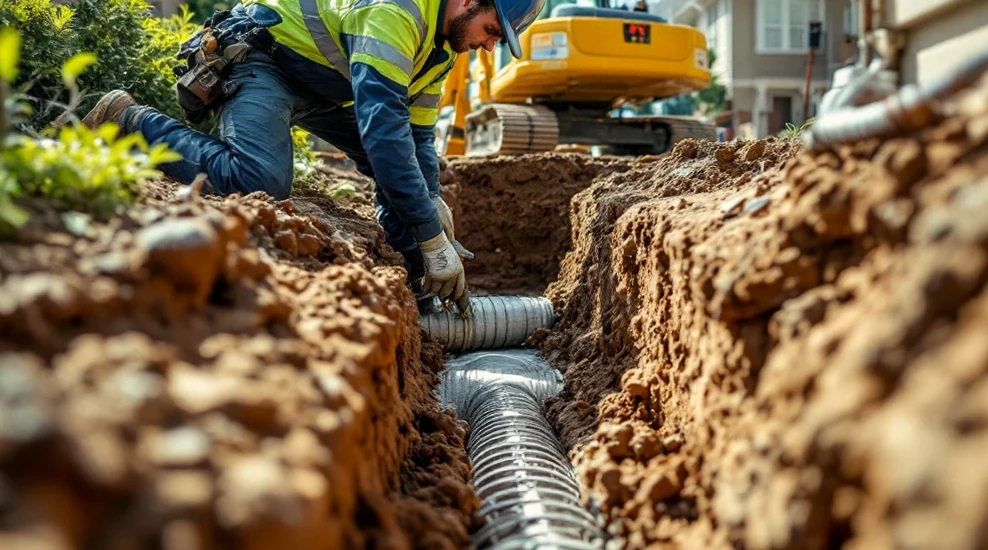
We start by digging a trench around the outside of your foundation, down to the footing. Then we clean the wall, patch any cracks, apply a waterproof coating, and install a drainage pipe that carries water away. Finally, we backfill with gravel and restore the soil.
The first step is always an inspection. We walk your property, check the grading, look at the downspouts, and probe the soil. That tells us where the water is coming from and how deep we need to go. If you have a finished basement, we also check the interior for cracks or efflorescence, that white chalky powder that shows moisture is moving through the concrete.
Once we know the scope, we mark out the dig area and bring in the equipment. For most houses, that's a mini-excavator that can fit through a standard gate. The trench runs along the exterior wall, usually 3 to 4 feet deep, down to the footing. If your basement is walkout or on a slope, the depth varies. We're careful to protect your landscaping, but expect some dirt and disruption.
With the wall exposed, we clean it with a wire brush or power washer to remove dirt, old coatings, and loose concrete. Then we patch any cracks with hydraulic cement or epoxy. After that, we apply a waterproof coating, usually a rubberized asphalt membrane or a cementitious coating, that bonds to the concrete and blocks water penetration.
The drainage layer is next. We lay a perforated pipe at the footing level, wrapped in filter fabric to keep silt out, and slope it toward a sump pit or daylight drain. Then we backfill with washed gravel, which lets water flow freely down to the pipe instead of pooling against the wall. The final backfill is soil, but we tamp it in layers to prevent settling.
Inside, we install a sump pump if the water table is high or if the drainage needs a collection point. The pump sits in a pit dug below the slab, and it automatically kicks on when water rises. That's the last line of defense. We also check your gutters and downspouts, because a downspout dumping water right against the foundation will undo any waterproofing job.
The whole process takes 3 to 5 days for a typical house, depending on the length of the wall and how deep we have to dig. We work around the weather, because you can't apply a membrane to a wet wall. That's a big reason why spring and fall are the busiest seasons for this work in Birmingham.
One thing we tell every homeowner: don't let a crew rush the backfill. If they throw all the dirt back in without compacting it, you'll have a sunken trench in six months, and water will pool right where you don't want it. We compact in lifts, usually every 8 to 12 inches, so the ground settles evenly.
- Inspect and plan.We check grading, downspouts, and the foundation to find where water enters and how deep to dig.
- Excavate the trench.A mini-excavator digs down to the footing along the exterior wall, exposing the foundation.
- Clean and patch.The wall is scrubbed clean, and any cracks are filled with hydraulic cement or epoxy.
- Apply waterproof coating.A rubberized membrane or cementitious coating bonds to the wall to block moisture.
- Install drainage.A perforated pipe wrapped in fabric is laid at the footing, sloped to a sump or daylight drain.
- Backfill and compact.Gravel goes in first, then soil, compacted in lifts to prevent settling.
Why Basement Excavation & Waterproofing matters for your home
A wet basement isn't just an inconvenience. It leads to mold, wood rot, foundation damage, and a musty smell that never goes away. Excavation and waterproofing stop the water at the source, protecting your home's structure and your family's health.
Walk into any Birmingham basement after a heavy rain, and you'll see the signs: damp walls, puddles on the floor, a smell like wet dirt. That moisture doesn't stay put. It soaks into the concrete, wicks up the walls, and creates the perfect environment for mold and mildew. Over time, it rots the wooden framing, rusts the nails, and attracts termites.
The structural damage is the bigger concern. When clay soil gets saturated, it expands and pushes against your foundation walls. That's called hydrostatic pressure, and it can bow the walls inward, crack the footing, or even shift the house. Once that happens, the repair costs go way up. A $7,000 waterproofing job is a bargain compared to a $30,000 foundation repair. (southerndry.com)
There's also the health angle. Mold spores in a damp basement don't stay in the basement. They circulate through the HVAC system and into your living space, triggering allergies and asthma. If you have kids or elderly family members, that's a concern, not a cosmetic one.
Finally, a dry basement adds usable square footage. Once it's waterproofed, you can finish it into a bedroom, a home office, or a playroom. That's value you can use, and it shows up on an appraisal. A finished basement in Birmingham can add tens of thousands to your home's resale value, but only if it's dry.
The flip side is that a neglected wet basement is a red flag to buyers. They'll walk in, smell the must, and either walk away or lowball you by the cost of the fix. Waterproofing now protects your investment in the most direct way possible.
Minor dampness
A little moisture on the walls after heavy rain, but no puddles. Check gutters and grading first.
Cracks and efflorescence
Visible cracks, white powder on the walls, and a musty smell. Time to call for an inspection.
Standing water
Puddles or a wet floor after rain. This is active water intrusion that needs excavation and drainage.
Common problems and what causes them
Most wet basements in Birmingham come down to poor grading, clogged gutters, or clay soil that holds water. Cracks in the foundation and a high water table make it worse. Each cause needs a different fix, and excavation is often the only way to get to the root.
Start with the simplest culprit: the ground around your house. If the soil slopes toward the foundation, every rain sends water straight to your walls. The fix is regrading, which is part of the excavation job. We cut the soil so it falls away from the house at least 6 inches over the first 10 feet. That alone stops a lot of problems.
Gutters and downspouts are next. A downspout that dumps water right at the footing is a guaranteed wet basement. We see it all the time. The fix is a downspout extension that carries water 6 to 10 feet away, or a buried drain pipe that ties into the same drainage system we install.
Then there's the clay. Birmingham's red clay expands when wet and shrinks when dry. That movement cracks the foundation over time. Once a crack opens, water follows the path of least resistance. Excavation lets us patch the crack from the outside, where the water is, and then seal the whole wall so no new cracks can leak.
A high water table is another issue, especially in low-lying areas near creeks or in the valley bottoms. Even with perfect grading, if the water table rises above your basement floor, you'll get water seeping through the slab. That's where a sump pump comes in. We dig a pit below the floor, install the pump, and route the discharge away from the house.
One problem that surprises homeowners is the window well. An old, rusted window well that's too shallow lets water pour in around the window. Excavation lets us replace it with a deeper, wider well that has proper drainage. That's a smaller job, usually in the $250 to $600 range, but it can be the difference between a dry basement and a flooded one. (birminghamgrading.com)
Finally, there's the issue of poor prior work. Some outfits slap a coat of paint on the inside wall and call it waterproofing. That doesn't stop hydrostatic pressure. It just delays the water until the paint fails. A fix that lasts goes outside, down to the footing, and that's what we do.
In Birmingham, the fix for a wet basement almost always starts with the dirt outside, not the paint inside.
Sources
Need excavation services in Birmingham? Get a free estimate today.
📞 256-857-3227