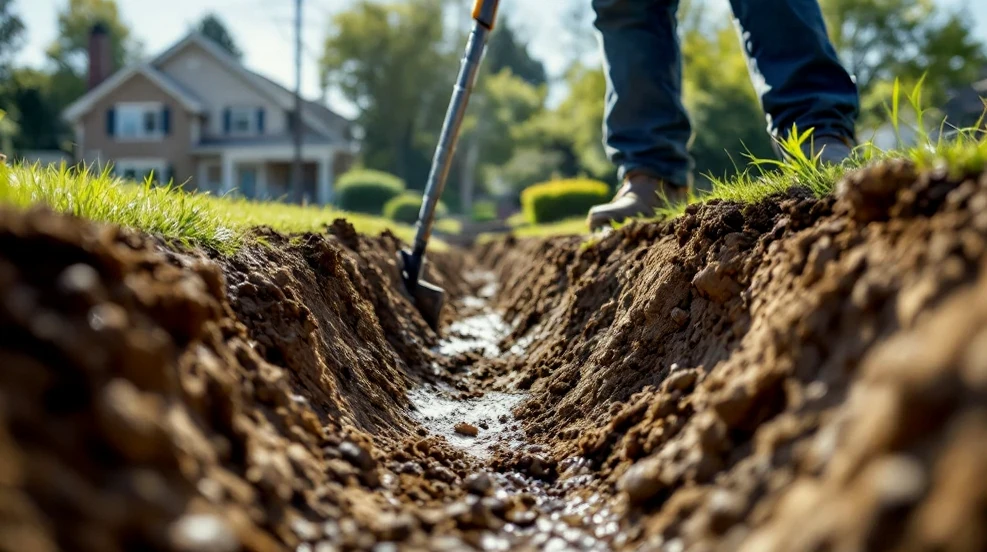
What is Trenching for Utility Lines and how does it work?
Trenching for utility lines is the process of digging a narrow, deep channel in your yard to bury electrical conduit, water pipes, sewer lines, or irrigation tubing. It starts with a free 811 locate, then a machine cuts the trench, the line goes in, and the crew backfills and compacts.
Think of it as the underground version of running a wire along a wall, except the wall is your yard and the wire has to survive decades of rain, tree roots, and the occasional shovel. The trench needs to be deep enough to meet local code, wide enough to work in, and straight enough that you can find it again later. That last part matters more than most homeowners expect.
In Birmingham, the first move is always the same: the crew calls 811 to mark existing underground utilities, which is free and the law. (birminghamexcavation.com) That single call prevents the kind of mistake that turns a simple job into a repair bill and a neighborhood outage. Once the marks are down, the digging can start.
The work is straightforward. A trencher, which is a machine with a digging chain or a boom arm, cuts a narrow slot through the soil. For short runs or tight spots, we dig by hand. The line gets laid in, inspected if required, and then the trench is backfilled in layers, with each layer compacted so the ground doesn't settle into a low spot later.
- 811 locates are free and mandatory in Birmingham.
- Trench depth depends on the utility and local code.
- Backfill and compaction prevent future sinkholes.
- Most residential trenches run 12 to 24 inches wide.
Short version
- Call 811 first, always.
- Trench depth and width follow code, not guesswork.
- Compaction during backfill is what keeps the yard flat.
- Cost depends on soil, surface, and length of the run.
How Trenching for Utility Lines works, start to finish
A trenching job runs in five phases: locate, plan, dig, install, and restore. Each phase has its own pitfalls, and leaving out any one of them is how you end up with a torn-up yard and a line that fails a year later.
Phase one is the locate. We call 811 at least a few days ahead, and the utility companies come out and spray paint or flag every buried line on your property. That includes gas, electric, water, sewer, and cable. It costs you nothing, and it's the law. (birminghamexcavation.com)
Phase two is the plan. We walk the route, check for obstacles like sprinkler heads, roots, and existing lines, and decide on the trench depth. The depth is set by what's going in: electrical conduit needs to be below frost line, water lines need to be below freeze depth, and sewer lines need a slope. In Birmingham, that usually means somewhere between 18 and 36 inches, depending on the utility.
Phase three is the dig. A walk-behind trencher works for most residential yards. It cuts a clean slot and piles the spoil to one side. For long runs or hard ground, we bring in a mini excavator. The key is keeping the trench straight and the walls stable. In sandy or wet soil, we might need to shore the walls to keep them from caving in.
Phase four is the install. The utility line goes in, connections get made, and we backfill with the spoil, but not all at once. We fill in lifts of 6 to 8 inches, compacting each one. That's what keeps the ground from settling into a dip later. If the trench crosses a driveway or walkway, we compact even harder.
Phase five is the restore. We grade the surface to match the surrounding yard, and if we cut through sod, we either replace it or reseed. The goal is to leave your property looking like we were never there, or close to it.
- Call 811.Free locates, required by law in Birmingham. Wait for the marks before digging.
- Plan the route.We walk the path, check for obstacles, and set the depth for the specific utility.
- Dig the trench.Trencher or hand digging, depending on access and soil. Straight and stable is the goal.
- Install the line.Lay the conduit or pipe, make connections, and get inspections if needed.
- Backfill and compact.Fill in lifts and compact each one. Then grade the surface and restore the sod.
Why Trenching for Utility Lines matters for your home
Trenching is the difference between a utility line that lasts decades and one that fails in a few years. It's also the difference between a clean yard and a permanent scar. Done right, you forget it ever happened. Done wrong, you're digging it up again.
A buried line has to survive pressure, temperature changes, and the weight of the soil above it. If the trench is too shallow, the line freezes or gets crushed. If the backfill isn't compacted, the ground settles and water pools, which can wash out the soil and expose the line. That's how you end up with a wet spot in the yard and a sewer line that backs up.
For electrical work, the stakes are higher. A shallow conduit can be nicked by a shovel or a sprinkler install. A deep one is out of the way. The National Electrical Code sets minimum depths, and your local inspector enforces them. We dig to code, and we dig a little deeper when the soil is rocky or the ground is prone to shifting.
There's also the matter of resale. A properly buried line is a selling point; a trench that's settled into a trough is a red flag. Buyers notice the dip, and they wonder what else was rushed. A clean, compacted trench tells a different story.
And then there's the cost of redoing it. If a line fails because the trench was wrong, you're paying for the dig-out, the new line, and the restoration, all over again. That's why we'd rather spend an extra hour on compaction than come back next year.
Common problems and what causes them
The most common problems with utility trenching are buried lines that get hit, trenches that collapse, and backfill that settles. Each one has a specific cause, and each one is avoidable with the right process.
The first problem is hitting an existing line. That happens when someone doesn't call 811 or doesn't wait for the marks. In Birmingham, that call is free and the law, so there's no excuse. (birminghamexcavation.com) A hit gas line is dangerous, a hit electric line is worse, and a hit water line floods your yard. The marks are there to keep that from happening.
The second problem is trench collapse. This happens in loose or wet soil, especially after heavy rain. The walls of a deep trench can cave in without warning, which is dangerous for anyone standing in it. That's why we dig wide enough to work safely and shore the walls when they're unstable. It's also why we don't dig in the middle of a downpour.
The third problem is settling. If the backfill isn't compacted in layers, the soil settles over time, leaving a low spot that collects water. That water can soften the ground, damage the line, and make the yard look terrible. The fix is simple: compact as you go, not just at the top.
There's also the issue of poor drainage. If the trench isn't sloped away from your foundation, water can follow the trench back to your house. That's a design problem, not a digging problem, but it's one we catch during the planning phase.
Minor settling
A slight dip in the trench line after a few months. Usually cosmetic, but fill it in to avoid water pooling.
Exposed line
If erosion or settling exposes the conduit or pipe, call us to rebury it before it gets damaged.
Hit utility line
If you hit a gas or electric line, call 911 and the utility company immediately. Don't touch anything.
Frequently Asked Questions
<p>Do I need to call 811 before trenching?</p>
Yes. In Birmingham, it's free and it's the law. (birminghamexcavation.com) The utility companies come out and mark their lines, so we know where it's safe to dig. Not doing this risks hitting a gas or electric line, which can be dangerous and expensive to repair.
How deep does a utility trench need to be?
It depends on the utility and local code. Electrical conduit usually needs to be at least 18 inches deep, water lines need to be below the frost line, and sewer lines need a slope for drainage. We check the requirements for your specific project and dig accordingly.
How much does trenching cost in Birmingham?
For standard trenching services like installing new utility lines or irrigation systems, local contractors in Birmingham often charge between $1,000 and $3,500. (birminghamgrading.com) The per-foot cost runs $5 to $12 for dirt, $12 to $24 for asphalt, and $15 to $30 for concrete. (developmentandengineering.com) The only way to get an exact number is a free on-site estimate.
What if I have a concrete driveway or asphalt path in the way?
We can cut through it, but it costs more. Trenching through asphalt runs $12 to $24 per linear foot, and concrete runs $15 to $30 per linear foot. (developmentandengineering.com) We'll patch the surface afterward, but the patch will be visible unless you plan to repave.
How long does a trenching job take?
Most residential jobs take one to two days. The locate takes a few days to schedule, but the digging and backfill usually go fast. A long run or hard soil can add time, but we'll give you a timeline before we start.
Will my yard look the same after you're done?
Close to it. We grade the surface to match the surrounding ground and either replace the sod or reseed. There might be a slight difference in grass color for a few weeks, but the trench line will be nearly invisible once the grass takes.
Can I trench my own utility line to save money?
You can rent a trencher and try, but you're on the hook for permits, inspections, and code compliance. A mistake can cost more than the job itself. If you're set on DIY, at least call 811 first. But for anything involving gas or electric, call us.
What happens if you hit an existing line?
We don't, because we call 811 and wait for the marks. But if a line is missed or unmarked, we stop digging immediately and call the utility company. That's the safe move, and it's why we never proceed without the locate.
Sources
Need excavation services in Birmingham? Get a free estimate today.
📞 256-857-3227